


Should You Hire an In-House Scheduler or Outsource It?


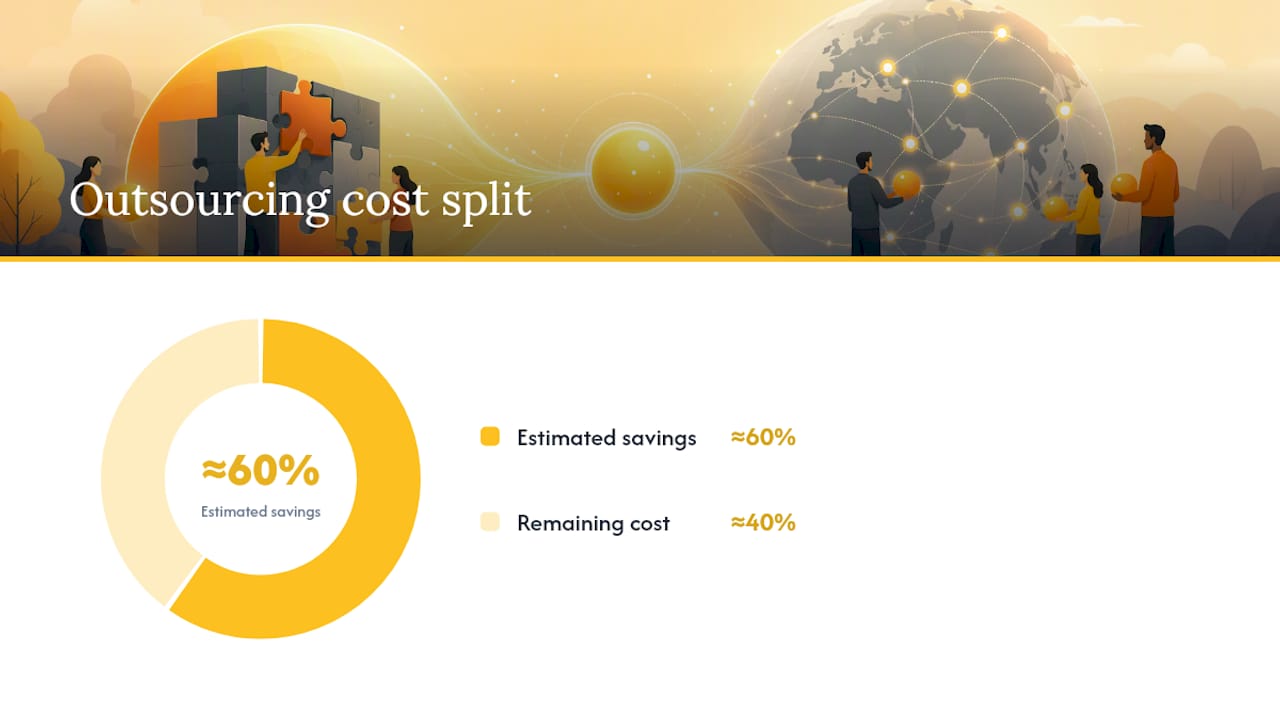
For most U.S. home care agencies, outsourcing scheduling is the smarter financial and operational move. A trained outsourced coordinator typically runs about 60% or more less than the full all-in cost of an in-house hire. The BOSS System’s own 70% savings figure reflects that same math applied to its Command Center Pods. Add 24/7 after-hours coverage that most solo schedulers can’t match without a night shift rotation, and the case gets stronger fast.
The exception: agencies with stable, high-volume census and a scheduler who’s already wired into your EHR, your caregivers, and your referral sources by name. If that’s you, on-site continuity may outweigh the savings.
Three moves to make this week:
Run a real cost model comparing your current scheduler salary against a subscription-based Pod.
Track fill rate, time-to-fill, and after-hours calls for 30 days as your baseline.
Pilot an outsourced coordinator on nights and weekends before touching your daytime schedule.
Key Takeaways
Outsourcing scheduling typically cuts all-in coordinator costs by roughly 60 to 70% while adding 24/7 coverage most in-house hires can’t match alone.
Point | Details |
Cost differential is real | Outsourced coordinators run about 60% or more below in-house all-in cost once taxes, benefits, and overhead are counted. |
Pilot before committing | A 30 to 90 day trial on after-hours coverage reveals fill-rate and overtime impact fast. |
Set guardrails, not just contracts | SLAs, a dedicated coordinator, and a signed BAA prevent the integration friction that undermines savings. |
Blended models work for most | Keep daytime scheduling in-house and outsource nights and weekends as a low-risk starting point. |
The BOSS System offers a direct path | Its Command Center Pod claims about 70% savings versus in-house cost with 24/7 coverage built in. |
Table of Contents
What Does a Scheduler Salary Home Care Agency Actually Pays For?
The line item on your P&L that says “scheduler salary” is never the whole story. A staffing coordinator’s base pay is just the entry point. Payroll taxes, benefits, office space, a laptop, scheduling software licenses, and the weeks spent recruiting and training someone new all stack on top of that number before the role produces a single filled shift.
Here’s what the in-house side of the ledger usually includes:
Base salary. Coordinator and intake coordinator salary ranges vary widely by region and agency size, but the number on the offer letter is only the starting point.
Payroll taxes and benefits. Employer-side FICA, unemployment insurance, and any health coverage or PTO add a real percentage on top of base pay.
Overhead. Desk space, a phone line, a laptop, and scheduling software seats all belong to that headcount.
Recruiting and onboarding time. Weeks of ramp-up before a new coordinator hits full productivity, often with a second hire lined up in case the first one doesn’t work out.
Outsourcing strips several of those lines out entirely. A subscription-based Pod carries no payroll tax burden, no benefits line, and no equipment purchase. Industry analyses put the reduction at roughly 60% or more when comparing a remote trained coordinator’s cost against the full in-house all-in figure, and Northstar’s cost review found that once orientation, productivity gaps, and turnover are counted, staffing costs run far higher than the base wage suggests.
Run the math on your own numbers: take your current scheduler’s fully loaded cost, including taxes, benefits, and overhead, and compare it against a monthly Pod subscription. Most agencies see breakeven inside six to eighteen months, often faster if turnover has been chewing through your scheduling desk.
Coverage, Control, and Compliance: The Trade-offs That Matter
Cost is only half the decision. The other half is what happens the night a caregiver calls off and a client’s family is on the phone at 2 AM.
What outsourcing tends to improve:
Reliable after-hours response instead of a scheduler’s personal cell phone as the backup plan.
Faster shift fills, because a dedicated Pod is built around finding a replacement caregiver fast, not juggling it between other tasks.
Fewer 2 AM calls landing directly on the owner.
Coordinators who already know home care software, documentation habits, and compliance basics before day one.
What it can cost you if done carelessly:
Less hands-on visibility into how a coordinator handles a borderline judgment call.
Integration friction if your EHR (HCHB or similar) isn’t set up to share scheduling data cleanly.
A training gap while the outsourced team learns your specific SOPs and escalation rules.
The fix isn’t avoiding outsourcing. It’s setting the guardrails before you start: a signed SLA, a dedicated coordinator (not a rotating pool), a signed BAA for HIPAA compliance, scripted handoff procedures for emergencies, and monthly performance reviews against agreed KPIs.
Pro Tip: Ask any outsourced provider for their after-hours escalation script before you sign anything. If they can’t show you exactly what a coordinator says to a panicked family member at midnight, that’s your answer.

When Should You Hire In-House vs. Outsource Now?
Run through this before you make a decision you’ll have to unwind in six months.
Count your unpredictable after-hours events per month. Fewer than five, in-house may hold. More than five, outsourcing usually pays for itself fast.
Check your percentage of unfilled shifts over the last quarter. Above 10% signals a scheduling capacity problem, not just a staffing shortage.
Weigh your margin sensitivity. Thin margins make the 60% cost differential harder to ignore.
Look at your growth rate. Agencies scaling fast need elastic staffing more than agencies holding steady census.
Assess your scheduling tech maturity. If you’re still running paper backup for your EHR, integration friction with an outsourced team will be smaller than you think.
Situation | Recommended path |
Fewer than 5 after-hours events/month, stable census, strong in-house continuity | Keep or hire in-house |
5+ after-hours events/month, unfilled shifts above 10%, thin margins | Outsource scheduling now |
Rapid growth or new territory expansion | Outsource for elasticity without adding headcount |
Uncertain, first time evaluating this | Blended model: in-house for daytime, outsourced Pod for nights/weekends |
A blended model is the pragmatic middle path for most agencies making this decision for the first time. Keep a core in-house presence for daytime continuity, and hand nights, weekends, and holidays to an outsourced Pod built for exactly that kind of coverage.
How Do You Pilot an Outsourced Scheduler Safely?
A short, tightly measured pilot tells you more in 60 days than a year of speculation. Testing over a 30 to 90 day window is usually enough to see whether fill rate and overtime spend actually move.
Set scope and length. Start with after-hours and weekend coverage only, 30 to 90 days, before touching daytime scheduling.
Define your KPIs upfront. Track fill rate, time-to-fill, owner after-hours calls, and overtime dollars weekly, not monthly.
Set success thresholds before you start. Decide in advance what “working” looks like, such as a 20% drop in owner after-hours calls or a measurable fill-rate improvement.
Build the integration checklist. Confirm which data fields the outsourced team needs, how visit verification syncs with your EHR, and what triggers a true emergency escalation to you.
Communicate the change. Give caregivers and families a heads-up on the new after-hours contact, and give the outsourced coordinator a documented SOP, not a verbal briefing.
Pro Tip: Don’t pilot your busiest, most complicated client roster first. Start with your steadiest cases so you’re judging the Pod’s performance, not your hardest edge cases.
Review results at day 30, adjust the SOP, and decide by day 90 whether to expand the pilot into daytime coverage.
Why This Cost Math Comes From Direct Operating Experience
Ian Dwight Abejo, founder of The BOSS System, didn’t build this model from a spreadsheet. He and co-founder Amy Abejo own and operate a home care agency themselves, which means the cost comparisons here come from running payroll, fielding 2 AM calls, and hiring coordinators directly before ever building a Pod around it.
The BOSS System’s core claims, grounded in that operating experience:
Trained home care coordinators cost about 70% less than the equivalent in-house hire, all-in.
The Command Center Pod provides 24/7 phone coverage, including nights, weekends, and holidays.
Every after-hours call gets documented, with escalation to the owner reserved for genuine emergencies only.
The 70% figure compares against the average all-in cost of an in-house coordinator, salary, payroll taxes, benefits, and admin costs included, using cost data referenced from Indeed, the IRS, and the Bureau of Labor Statistics.
What the Industry Gets Wrong About Scheduling Costs
Most advice on this topic treats the scheduler salary line as the whole decision. It isn’t. The real number that matters is the fully loaded cost of the role against the fully loaded cost of the alternative, and almost nobody runs that math before they hire.
The bigger blind spot is treating outsourcing as a cost cut instead of a coverage upgrade. Agencies that outsource only to save money often skip the SLA, the dedicated coordinator assignment, and the escalation script, then blame outsourcing when a shift falls through. The savings are real, but they only hold up when the operational guardrails go in at the same time as the contract.
If you take one thing from this: model the after-hours gap first, not the daytime schedule. That’s where owner burnout actually lives, and it’s where outsourcing scaling strategies show the clearest, fastest return. Fix the 2 AM problem before you touch anything else.
— Ian Dwight Abejo
Get Your Nights Back Without Losing Coverage
The Command Center Pod covers phones 24/7, so a 2 AM call-off gets handled by a trained team, the shift gets filled, the family gets a calm voice, and you only get woken for a true emergency. Beyond after-hours coverage, The BOSS System staffs dedicated virtual assistants trained specifically for home care roles: staffing coordinators, intake coordinators, recruiters, billing specialists, and more. If you’re ready to see what a pilot would look like for your agency, start with a conversation about your options or reach out directly to talk through your after-hours gaps and current fill rates.
Sources
Recommended


Comments