


Reduce Caregiver Overtime for Home Care Agencies With an Ops First Pod


The fastest way to reduce caregiver overtime is to outsource after-hours coverage and scheduling coordination while building proactive weekly schedules that flag overtime before it happens. The BOSS System’s Command Center handles the calls that used to force emergency overtime, and a dedicated coordinator through BOSS costs substantially less than the same hire in-house.[^1]
TL;DR:
Outsourcing after-hours coverage and scheduling through a trained command center prevents emergency overtime by handling last-minute call-offs before morning.
Building a proactive schedule and maintaining a backup caregiver pool are among the most effective strategies to reduce overtime quickly.
Using automated reminders, route clustering, and real-time overtime alerts can cut emergency staffing needs and drive-time expenses.
A trained outsourced coordinator costs about 70% less than an in-house role and can prevent costly overtime fills caused by call-offs.
Implementing escalation rules and properly documenting handoffs are essential to avoid just shifting chaos when outsourcing overnight coverage.
Table of Contents
How Outsourcing Scheduling And After-Hours Coverage Prevents Overtime
Overtime rarely comes from planned shifts. It comes from the 2 AM call-off nobody was staffed to handle, the missed visit that turns into a frantic same-day fill, and the owner who ends up covering a shift herself because there was no one else awake to make three phone calls. Every one of those events gets solved the same way: someone has to answer the phone, find a replacement caregiver, and document the outcome, fast, without waking the agency owner unless it’s a true emergency.
That’s the exact gap a 24/7 Command Center closes. When a caregiver calls off overnight, a trained team fields the call, works the phone tree to fill the shift, keeps the family calm, and logs everything for compliance, all before morning. Nobody is paying a caregiver time-and-a-half to cover a gap that a night-shift coordinator could have filled at straight pay.
Outsourcing scheduling and administrative work also tends to cost less than adding another in-house coordinator, since the outsourced team doesn’t carry payroll taxes, benefits, or office equipment overhead.[^2] Specific problems this structure fixes directly:
Missed visits caused by no one catching a call-off until the shift start time
Phone coverage gaps overnight, on weekends, and on holidays
Uncontrolled call-outs that get patched with mandatory overtime for whoever’s available
Administrative backlog that pulls office staff away from proactive scheduling
The BOSS System was built by Ian Dwight Abejo and Amy Abejo, who run their own home care agency and designed the Pod structure around problems they lived through firsthand. A trained coordinator through BOSS costs substantially less than the fully loaded cost of hiring the same role in-house. That difference shows up directly in your overtime line, because it’s the same team preventing the emergency fills that used to cost time-and-a-half.
Tactical Playbook: Policies, Tools, and Workflows to Cut Overtime Now
Overtime reduction works best as a stack of small interventions, not one big fix. Here’s the order that produces results fastest, based on how agencies typically see the biggest wins first.
Build schedules proactively, not reactively. Flag projected overtime at the schedule-build stage, before the week starts, so a scheduler can redistribute hours while there’s still time to react. This single habit is widely considered the most effective lever agencies have against overtime.
Maintain a PRN or on-call pool. Recruit five to ten backup caregivers per 20 to 30 primary staff, and offer a small guaranteed monthly minimum to keep them engaged and available for last-minute fills.
Automate reminders and enable self-service shift pickup. Multi-channel texts sent 12 hours and again 2 hours before a shift can cut no-shows by up to a quarter, which means fewer emergency scrambles that end in overtime.
Cluster caregivers geographically. Route optimization and territory-based assignment can cut drive time by 20 to 30%, and that reclaimed time can absorb hours that would otherwise spill into overtime.
Set real-time overtime alerts. Flag any caregiver projected to hit 35 to 38 hours for the week so a scheduler can redistribute the remaining shifts before the threshold is crossed.
Use small shift premiums instead of overtime. A $2 to $5 hourly premium on a last-minute pickup almost always costs less than paying the same hours at 1.5x, and it gives PRN staff a reason to say yes.
Cap weekly hours and require authorization above a threshold. No caregiver should cross into overtime territory without a supervisor sign-off, full stop.
Pro Tip: Rotate who gets called first for open shifts. Agencies that keep leaning on the same three reliable caregivers eventually push those caregivers into overtime by habit. A tiered contact list that prioritizes underused staff spreads hours more evenly and keeps your best people from burning out.
60 to 90 Day Checklist to Reduce Caregiver Overtime
Rolling out these changes works best in phases. Trying to do everything in week one usually causes more confusion than it fixes.
Days 1 to 14, audit and quick wins:
Pull your current overtime percentage, fill rate, caregiver utilization, and average time-to-fill a call-off shift
Turn on overtime threshold alerts in whatever scheduling system you use
Launch automated shift reminders for every active caregiver
Require every scheduler to build the coming week’s schedule at least five days out
Month 1, staffing and training:
Recruit a PRN pool sized to roughly 20 to 30% of your primary caregiver headcount
Cross-train two or three office staff on scheduling so coverage doesn’t collapse when one person is out
Define your on-call rotation and set escalation timelines (who gets called, and when)
Months 2 to 3, integrate outsourced coverage:
Onboard an outsourced Pod or virtual coordinator, and test escalation rules on a handful of shifts before going live agency-wide
Confirm documentation handoffs meet your compliance standards
Refine route clustering using the first two months of drive-time data
Measuring Success: KPIs and a Simple ROI Check
Four numbers tell you whether your overtime reduction effort is working: overtime as a percentage of total paid hours, schedule fill rate, missed-visit rate, and average time-to-fill a call-off shift.
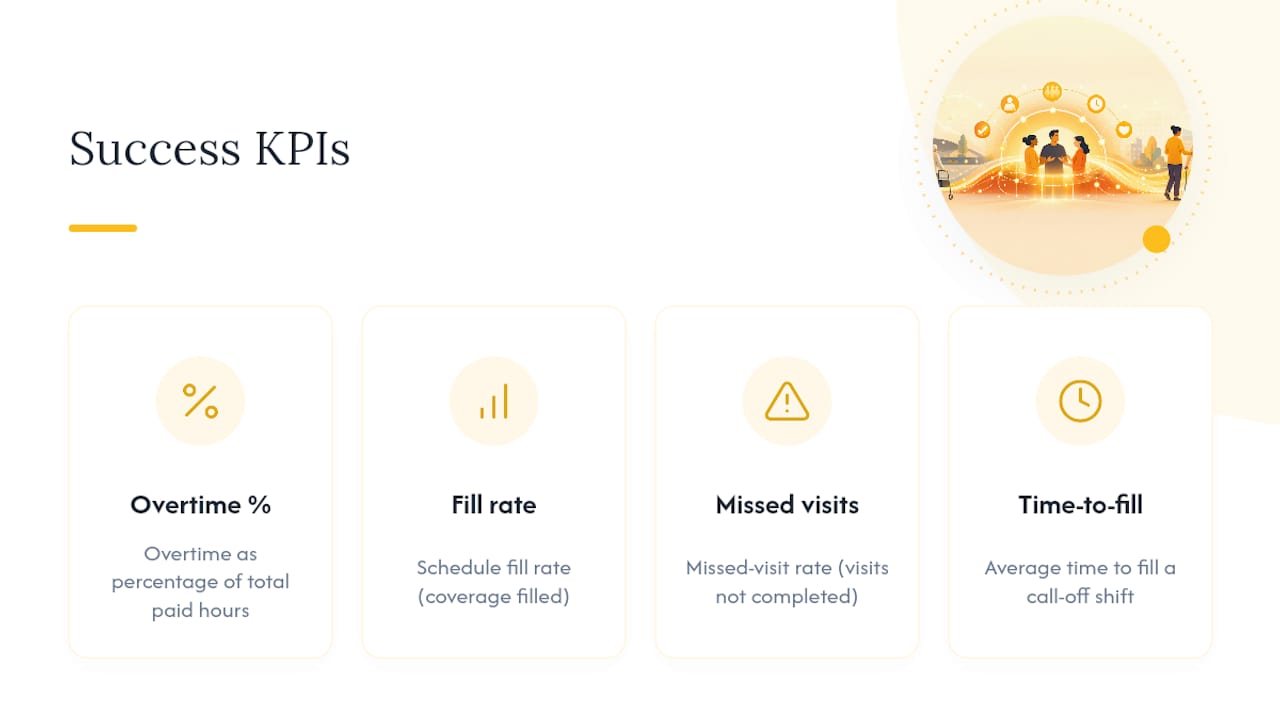
If you’re running an outsourced Pod, ask for a monthly report tying fill rate and overtime hours to the weeks the Pod actually handled coverage, so the savings are attributable, not assumed.
Founder Perspective: What Changes When You Stop Owning the Phone at 2 AM
The biggest shift isn’t financial, it’s personal. When a Command Center takes the overnight calls, you stop bracing for the phone every time it buzzes after 9 PM. Fewer emergency wake-ups means fewer panicked, overtime-priced fixes the next morning.
The catch is boundaries. An outsourced Pod only works well when escalation rules are written down and documentation handoffs are clean, otherwise you’ve just moved the chaos somewhere else. Get those two things right in the first 90 days, and the rest tends to follow.
— Ian Dwight Abejo
Cut Overtime Costs With The BOSS System
You’ve read the playbook: proactive scheduling, a PRN pool, alerts, and route clustering all help. The piece that makes those tactics stick around the clock is coverage that doesn’t depend on any single employee showing up. That’s what The BOSS Command Center delivers, staffed by a team with a leader and built-in backup, not one on-call phone that goes unanswered.
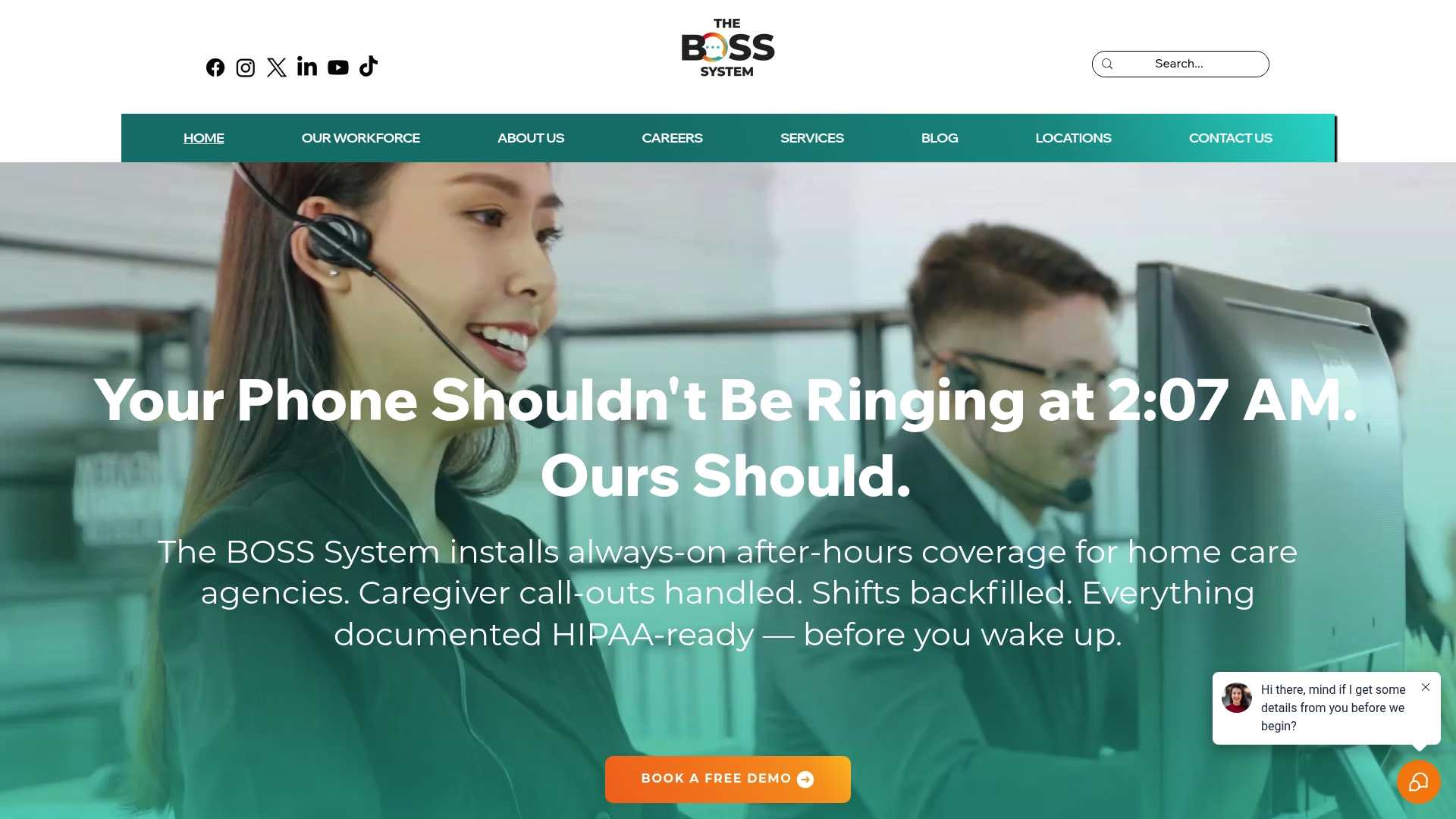
Beyond after-hours calls, BOSS’s On-Call Program and dedicated scheduling coordinators handle the day-to-day work that eats into a manager’s time: filling call-offs, coordinating PRN staff, and keeping schedules built five days ahead. A trained coordinator through BOSS costs about 70% less than the same hire in-house, once you account for payroll taxes, benefits, and administrative costs.* If you’re staffing up in-house right now, compare the true cost against outsourcing before you sign an offer letter for a clinical coordinator role. Ready to see what a Pod would look like for your agency? Get started with BOSS and request a coverage quote this week.
*Compared to average all-in cost of an in-house coordinator (salary, payroll taxes, benefits, admin costs). Sources: Indeed, IRS, Bureau of Labor Statistics.
Further Reading on Scheduling and Overtime Reduction
For deeper background, see The BOSS System’s posts on how outsourcing scales an agency and what 24/7 after-hours coverage costs. If you’re onboarding PRN caregivers, Total Tox’s workforce screening services cover drug testing for new hires entering your backup pool.
[^1]: Caregiver Scheduling Optimization: Data-Driven Strategies to Cut Costs & Improve Care [^2]: Virtual Assistant Scheduling For Home Care Services: Tips For Growing Agencies [^3]: Home Health Scheduling Best Practices: Reduce No-Shows & Overtime [^4]: Caregiver Shift Planning & Coverage Guide: Templates, Strategies & Tools
Recommended


Comments