


Protect Revenue After 5 PM: Home Care Intake Coordinator Role


A home care intake coordinator is the agency’s front door for new referrals, responsible for verifying eligibility, documenting records, and starting care efficiently. The role serves referral sources, patients, and the agency’s own bottom line by turning a phone call into a scheduled caregiver. Coordinators work onsite, remote, or hybrid, and shifts often stretch into evenings or weekends to catch referrals before a competitor does.
TL;DR:
Most agencies require one to three years of healthcare or admissions experience and familiarity with EMR and payer portals to reduce errors that could delay care or trigger denied claims.
After-hours and weekend shifts are essential for capturing urgent referrals and avoiding lost revenue, especially when remote work relies on a HIPAA-compliant home setup and time zone awareness.
Structured workflows, including checklists and workload caps, significantly lower burnout and prevent missed documentation or authorization errors that compromise compliance.
Career progression often moves from intake roles to senior, supervisory, or clinical coordination positions, with certifications like medical billing or case management accelerating advancement.
Table of Contents
What Is a Home Care Intake Coordinator’s Role in Agency Operations?
Intake sits at the front of the agency, before scheduling, before clinical coordination, before billing ever touches a case. A referral comes in, and the coordinator decides how fast and how cleanly it turns into a start of care. That single decision ripples through every department behind it.
The role’s boundaries matter more than most jobseekers realize. Intake owns the referral until eligibility is confirmed and paperwork is complete, then hands the case to scheduling or clinical staff. It is not the same as a scheduling-only position, which manages caregiver calendars after admission, and it is not clinical coordination, which oversees care plans once services start.
Most coordinators report to an intake supervisor, office manager, or director of operations, depending on agency size. Hiring managers and agency owners frame the job as a risk-management function: intake protects revenue and compliance by making sure documentation and authorizations are accurate before care begins, according to ZipRecruiter’s role overview. Get intake wrong, and the agency inherits denied claims and delayed starts of care weeks later.
Daily responsibilities typically include:
Fielding referrals from hospitals, physicians, discharge planners, and self-referring families
Running eligibility and insurance triage before a case moves forward
Logging referral source, diagnosis, and payer information into the agency’s system of record
Flagging incomplete or high-risk referrals for supervisor review
What Are the Core Responsibilities of an Intake Coordinator?
The job description sounds simple on paper: answer the referral, verify coverage, schedule the visit. In practice, it’s a rapid sequence of small decisions where one skipped step can delay care by days.
Here’s the typical workflow a coordinator runs for every new referral:
Intake the referral through phone, an online portal, fax, or email, and log the source and urgency level immediately.
Verify insurance and benefits, checking active coverage, plan type, and whether prior authorization is required before service can start.
Collect clinical and demographic history, including diagnosis, physician orders, and emergency contacts, a step that shows up consistently in posted job templates for behavioral health and home care intake.
Enter and audit documentation in the agency’s EMR or EHR system, cross-checking for missing signatures or expired orders.
Schedule the start-of-care visit and match an available caregiver to the case based on skill, location, and availability.
Communicate outcomes back to the referral source, the family, and the assigned clinician, closing the loop on every open question.
Standard coordinator templates list care-plan coordination, caregiver scheduling, documentation, and quality assurance as core competencies, and most require one to three years of relevant experience, according to HRCloud’s job description template. That experience bar exists because intake errors compound. A missed prior authorization doesn’t just delay one case. It can trigger a denied claim weeks later, long after anyone remembers which step got skipped.
Pro Tip: Build a one-page pre-admit checklist covering eligibility, orders, and emergency contacts, and require a coordinator to initial each line before a case moves to scheduling. Agencies that formalize this step see fewer admission denials and faster time-to-care, based on intake workflow patterns documented by Humana’s home health intake postings.
What Are Typical Work Hours for a Home Care Coordinator?
Intake doesn’t run on a nine-to-five clock, because referrals don’t either. A hospital discharge planner calling at 6 PM on a Friday needs an answer before the weekend, not on Monday morning.
Common coverage windows include:
Standard business hours, roughly 7 AM to 7 PM local time, for agencies with layered daytime staffing
Night rotations, often 5 PM to 9 AM, built specifically to catch urgent referrals and admissions overnight
Weekend shifts to cover the gap when hospital discharges spike and most competing agencies are closed
Remote intake coordinator roles are now common across the industry, and employers typically require a HIPAA-compliant home workspace along with hard-wired, high-speed internet, not Wi-Fi alone, based on Humana’s remote intake coordinator listing. Some remote postings publish shift windows by time zone rather than fixed local hours, which shifts the scheduling complexity from geography to time-zone math.
Agencies that skip after-hours coverage entirely tend to lose referrals to competitors who answer the phone. A referral source with an urgent placement rarely waits for a callback the next business day. That’s why many agencies model on-call rotations or dedicated overnight coverage as a defensive move, not a luxury.
Overnight and weekend rotations exist specifically to triage urgent admissions and keep the referral pipeline moving without gaps, a pattern echoed across remote intake postings in home health and nursing.
What Qualifications Does an Intake Coordinator Need?
Hiring bars for this role vary by agency size, but the pattern across job postings is consistent enough to plan around.
Education and experience
A high school diploma is the floor for entry-level postings; an associate degree or bachelor’s degree is preferred for senior intake specialist roles
One to three years of healthcare, contact-center, or admissions experience shows up in most postings as the practical minimum, per Humana’s job details
Technical proficiency
Comfort with EMR or EHR platforms, since documentation accuracy at intake protects the agency downstream
Familiarity with payer portals for eligibility checks and prior authorization submissions
Working knowledge of Microsoft Office, scheduling software, and reasonably fast, accurate typing
Soft skills that separate good coordinators from struggling ones
Multitasking under interruption, since calls, portal alerts, and documentation deadlines rarely arrive one at a time
De-escalation and customer service instincts, particularly with anxious families calling about a parent’s discharge
Bilingual ability, which agencies in diverse markets increasingly list as preferred, not optional
Clinical licensure isn’t required for most intake roles, but agencies that staff a licensed nurse or social worker in a senior intake specialist seat use that background to catch clinical red flags earlier in the referral process.
What Does a Home Care Coordinator Get Paid?
Pay for this role varies widely by title, location, and whether the position is remote. Job listings use several overlapping titles for what is functionally the same work, and that naming inconsistency affects what a given posting pays.
Intake coordinator postings tend to anchor to standard healthcare admin pay bands, with entry-level roles starting lower and senior intake specialist titles paying more
Referral specialist and intake scheduler titles sometimes pay slightly less, reflecting a narrower scope focused on scheduling rather than full eligibility work
Remote intake coordinator roles can pay comparably to onsite positions, though some employers offset location flexibility with a lower hourly rate
Bilingual candidates and those with a clinical background (LPN, CNA, medical assistant) routinely command higher offers, since that background reduces training time and clinical risk
Agencies benchmarking a new job post should look closely at the exact title used in comparable listings before settling on a number. “Intake coordinator” and “referral specialist” can describe the same job with a $2 to $4 hourly gap between them, simply because of title inflation in the posting.
What Makes Intake Work Stressful, and What Actually Helps?
Ask any intake coordinator what wears them down, and the answer is rarely one dramatic thing. It’s volume stacked on urgency stacked on documentation pressure, repeated every shift.
The heaviest stressors tend to be:
Referral volume that spikes unpredictably, especially around hospital discharge cycles
Time pressure on urgent placements where a slow response costs the agency the referral entirely
Documentation accuracy demands that leave little room for shortcuts
Night and weekend rotations that disrupt normal sleep and family routines
Fixes that actually move the needle tend to be structural, not motivational. Structured handoff scripts between shifts prevent details from getting lost when one coordinator clocks out and another takes over a live referral. Scripted eligibility calls speed up payer portal work and reduce the errors that come from improvising each time. Training coordinators on a small, fixed set of payer portals with templated scripts cuts verification time and mistakes compared with ad-hoc portal use, based on HRCloud’s coordination framework.
Pro Tip: Cap the number of active referrals any single coordinator juggles at once, and build in a real break between high-urgency calls. Burnout in intake usually comes from unbroken volume, not from any single hard case.
Agencies that add a second layer of staffing, a backup pod behind the primary coordinator, tend to see fewer dropped referrals than agencies relying on one person to catch everything.
How Do Agencies Keep Intake Coverage Reliable Around the Clock?
Reliable intake coverage rarely comes from one great hire. It comes from layered staffing, where a backup team exists so coverage never depends on a single person answering the phone at 2 AM.
A command-center style pod model handles after-hours calls by triaging the request, filling the shift if a caregiver calls off, documenting the interaction, and escalating to the owner only when something is a true emergency. That structure matters because a single overnight coordinator, however good, still gets sick, takes vacation, or simply can’t be awake every night of the year.

Trained home care coordinators also outperform generalist virtual assistants on this work specifically because they already know the vocabulary, the payer logic, and the documentation standards the job demands. A generalist VA can answer a phone. A coordinator trained in home care workflows knows what to ask, what to log, and what qualifies as urgent.
The BOSS System, founded by home care agency owners Ian Dwight Abejo and Amy Abejo, builds its staffing model around that distinction. Some companies state that a trained coordinator through their system can cost less than an equivalent in-house hire when considering payroll taxes, benefits, and equipment, a comparison worth weighing against your own hiring budget.
What this model typically covers:
After-hours and overnight call coverage so no referral sits unanswered until morning
Real-time shift backfilling when a caregiver calls off unexpectedly
Documentation of every call, so nothing gets lost between shifts
Escalation only for genuine emergencies, protecting the owner’s personal time
Intake quality shapes referral volume directly. A high-performing coordinator improves referral-source satisfaction, and that satisfaction shows up later as more referrals from the same hospital or physician group, a dynamic ZipRecruiter’s role analysis backs up with its own framing of the position.
Where Can an Intake Coordinator’s Career Go From Here?
Intake is rarely a dead-end job. It’s usually a training ground for bigger roles inside the agency, because the coordinator who masters eligibility rules and payer quirks already understands half of what scheduling and billing need.
Common promotion paths run from intake coordinator to senior intake specialist, then into intake supervisor, care coordination manager, or a billing and revenue cycle role. Some coordinators move sideways into clinical coordination if they hold or pursue a nursing or social work credential.
A simple development plan for a new hire looks like this:
First 90 days: Master the referral workflow end to end, including every payer portal the agency uses regularly.
Days 90 to 180: Take ownership of a specific referral source relationship and start handling escalations without supervisor sign-off.
Days 180 to 365: Cross-train on scheduling or billing basics, and begin mentoring the next new hire through the same 90-day ramp.
Credentials that accelerate this timeline include a medical billing certificate, a case management certification, or progress toward an LPN license.
What Owners Actually Look for When Hiring Intake Staff
Resumes rarely predict who survives this job. What separates a coordinator who lasts from one who burns out in ninety days is temperament: how they handle an angry discharge planner at 4:45 PM, and how meticulously they document a call they’re rushing through.
The interview questions worth asking aren’t about software skills. Ask a candidate to walk through how they’d handle a referral missing a physician signature, or describe a time they had to push back on incomplete paperwork. The answers reveal documentation discipline faster than any resume line.
Red flags show up as vague answers about “figuring it out” rather than specific steps, and any hesitation around calling a payer back to confirm a detail that isn’t quite clear. Downstream, sloppy intake habits become denied claims and frustrated referral sources months later, long after the interview is forgotten.
— Ian Dwight Abejo
Get Dependable Intake Coverage Without Adding Headcount
Building a reliable intake operation in-house means recruiting, training, and then staffing nights, weekends, and holidays, on top of whatever your daytime team already handles.
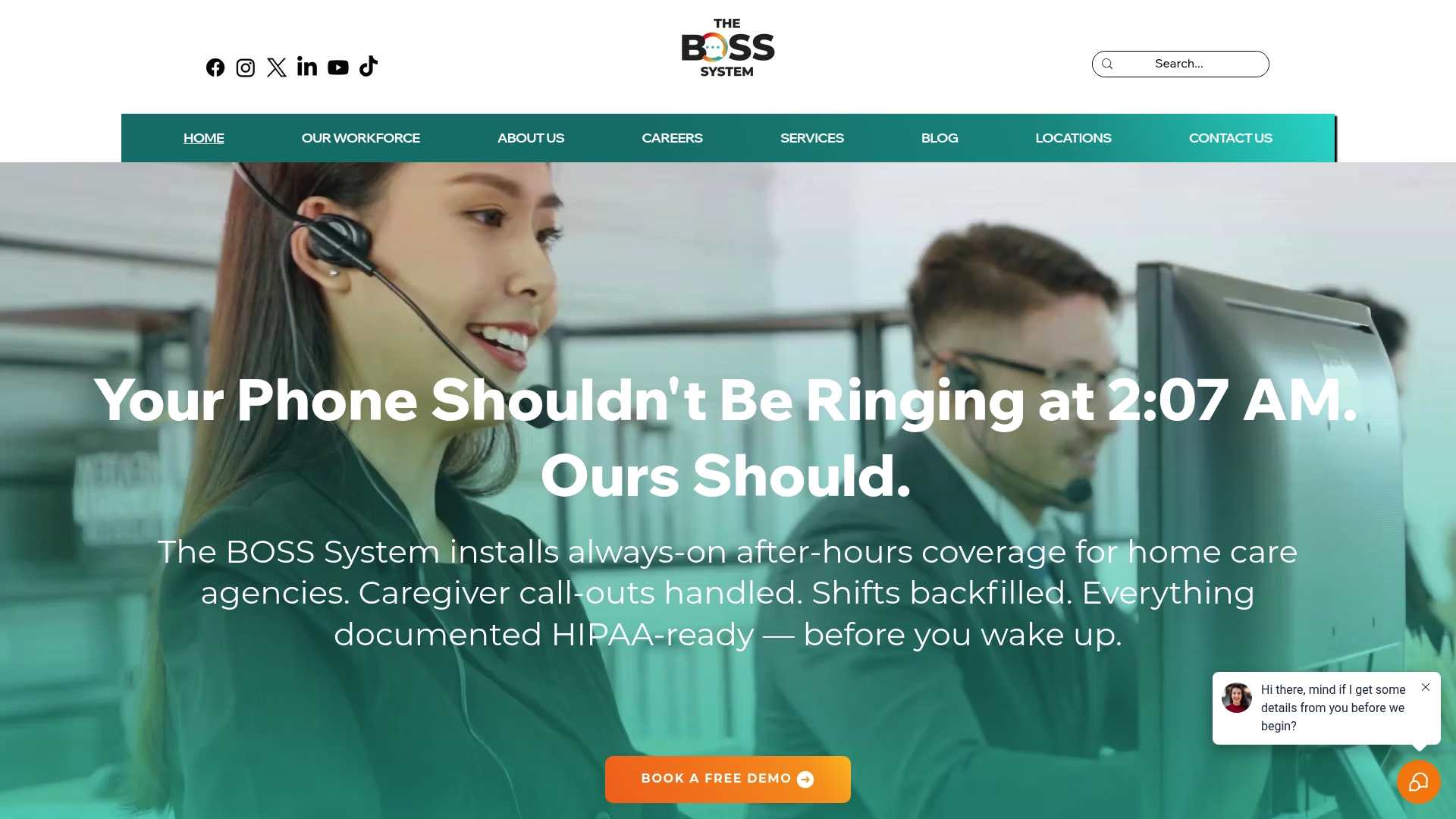
The Intake & Patient Communication Pod handles referral intake, eligibility triage, and documentation directly, while The Command Center Pod covers the after-hours calls that would otherwise wake an owner at 2 AM. Both are staffed by coordinators trained specifically in home care workflows, not general call-center agents learning the industry on the job. For agencies that want to test the model on a smaller scale first, BOSS Virtual Professional starts at $8 per hour and can be layered into an existing team without a full pod commitment.
If missed referrals or overnight call-offs are costing your agency revenue, start with a free trial and see how the coverage holds up on a real week of calls.
Sources
The job postings and templates cited throughout this guide give a clearer picture than any summary can:
FAQ
What Are the Responsibilities of an Intake Coordinator in Home Health?
An intake coordinator processes new referrals, verifies insurance eligibility, collects clinical and demographic information, and schedules the start-of-care visit. They also maintain documentation in the agency’s EMR system and communicate outcomes back to referral sources and families, a duty set confirmed across posted home health intake roles.
What Does a Home Care Coordinator Do Day to Day?
A home care coordinator manages the referral-to-care pipeline: triaging incoming calls, checking payer eligibility, entering data accurately, and matching caregivers to new cases. The role acts as a quality and revenue safeguard, since errors at this stage create billing and compliance problems later, according to ZipRecruiter’s breakdown of the position.
What Qualifications Do You Need to Be an Intake Coordinator?
Most postings require a high school diploma at minimum, with an associate or bachelor’s degree preferred for senior roles, plus one to three years of healthcare or admissions experience. Comfort with EMR systems, payer portals, and strong communication skills round out the standard requirements listed in common job templates.
Is an Intake Coordinator Job Stressful?
Yes, the role carries real pressure from referral volume, urgent placement deadlines, and strict documentation accuracy demands. Agencies that reduce this stress typically use structured handoff scripts, workload caps, and layered backup staffing rather than relying on one person to catch every call, an approach The BOSS System builds its pod model around.
How Much Does The BOSS System Cost for Intake Support?
BOSS Virtual Professional starts at $8 per hour, while pod-based services like the Command Center Pod and Intake & Patient Communication Pod have pricing available on request through the company’s site.
Recommended


Comments