


Home Care Owners: Get Nights Back in Weeks, Cut Costs 70%

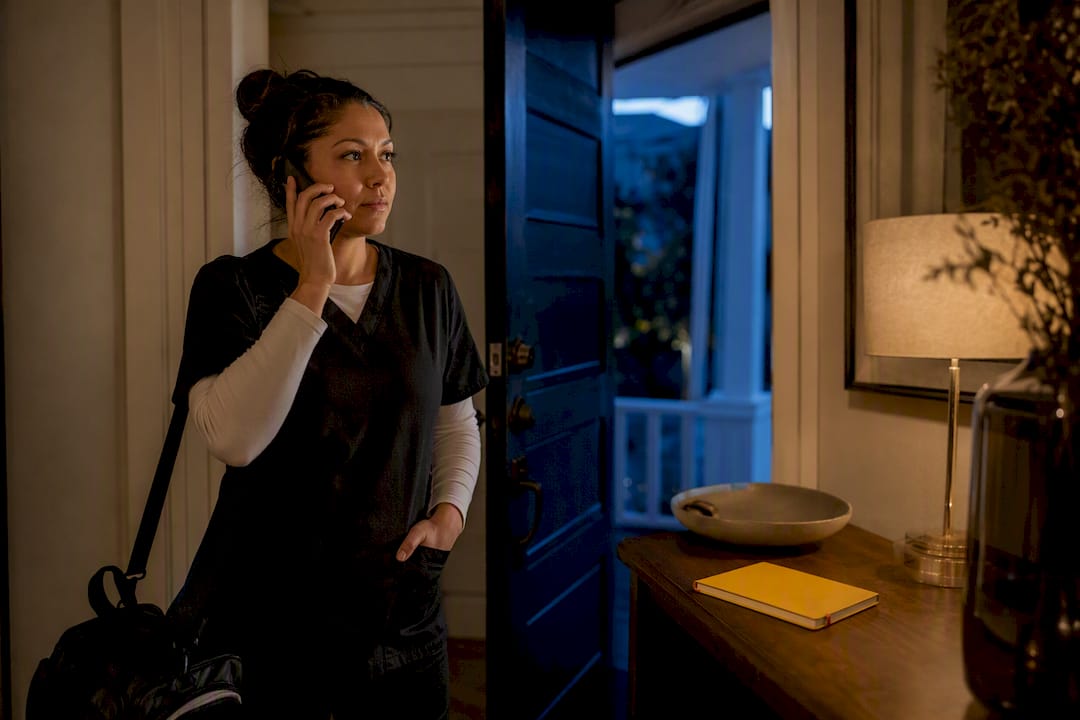
The fastest way to stop after-hours calls from taking over your nights is to move that responsibility off your daytime staff entirely and onto a trained after-hours desk or outsourced Pod that follows your agency’s own protocols. Routine call-offs and shift gaps get resolved on the spot; only true clinical emergencies escalate to you. The office wakes up to a clean morning report instead of a pile of missed messages.
TL;DR:
Outsourcing after-hours calls to a trained desk or Pod eliminates employee burnout and ensures routine call-offs are handled immediately, with clinical emergencies escalated per your protocols.
Implementing clear, specific protocols based on five key fields and testing them with a two-week pilot can dramatically improve call handling and reduce owner wakeups.
Most outsourced models, including AI and trained Pods, can go live within days to weeks, with costs often being 70% less than hiring full-time overnight staff.
Key performance metrics such as shift fill time, after-hours contact volume, and owner wakeups should improve within 30 days of switching, otherwise protocols need review.
The BOSS System offers a automated, scalable solution with a trained team handling calls 24/7, providing significant cost savings and quick deployment for home care agencies.
Table of Contents
How Do You Stop After-Hours Calls From Home Care Owners?
Three real models exist for covering nights, weekends, and holidays. Each one solves the problem differently, and picking the wrong one for your agency’s size usually means you’re back to square one in six months.
In-house dedicated on-call. You hire someone specifically for the evening and weekend shift, separate from your daytime scheduling staff. This works when call volume is high enough to justify a full salary, but on-call rotations rank among the top drivers of scheduler burnout and turnover in home care, according to AxisCare. One person carrying the pager every week burns out fast, and when they quit, you’re back on call yourself while you recruit a replacement.
Outsourced trained after-hours desk. A dedicated coordinator or Pod answers using your agency’s specific escalation rules, not a generic script. Staffingly’s operational research found that this model resolves routine call-offs and reschedules on the spot, escalates clinical concerns immediately, and produces a morning report the office can act on before 9 a.m. It removes the burnout driver entirely because no single employee owns the night shift.
AI voice layer with human overflow. Automation captures inquiries and logs basic information after hours, while a live remote intake team handles anything emotional or clinical. Staffingly’s data on after-hours inquiry calls lost to voicemail shows agencies routinely lose high-intent prospective client calls simply because intake staffing matches office hours, not caller behavior.
Your decision should hinge on:
Current after-hours call volume (a handful a week versus a dozen a night changes the math).
Whether you’re recruiting new referrals overnight or mostly handling caregiver call-offs.
How fast you need coverage live versus how much time you have to hire and train.
Budget shape: fixed subscription cost versus full-time salary, taxes, and benefits.
How Do You Write After-Hours Protocols That Actually Work?
A desk or Pod only performs as well as the rules you give it. Vague instructions produce vague results, and vague results mean you’re still getting called at midnight for things that didn’t need you.
Separate routine from clinical. A caregiver calling off for a Tuesday morning shift is routine; find a replacement, log it, move on. A client reporting a fall, chest pain, or a medication reaction is clinical and gets escalated immediately, no exceptions.
Build the SOP around five fields. Caller verification, a shift-fill script with backup caregiver order, required documentation fields, a named escalation contact with a phone number, and a standardized morning report format.
Map the integration points. Confirm the desk or Pod can see your scheduling software and EHR, log calls in real time, and operate under permissions that satisfy HIPAA compliance.
Run a pilot before full rollout. Give the desk two weeks of live calls with your existing on-call person as backup, then review every escalation to confirm the routine/clinical line held.
Set acceptance criteria. Zero missed clinical escalations, complete morning reports, and no owner wakeups for anything that should have been handled by protocol.
Pro Tip: Write your escalation criteria as a short, printable card with real examples from your own agency’s history, not generic categories. A desk trained on “client fell and is on the floor, unresponsive” performs better than one trained on “medical emergency.”
What Does It Cost to Go Live, and How Fast Can You Move?
Outsourced desks and AI-driven intake pilots typically go live in days to a few weeks once your SOP is written. Recruiting, hiring, and training an in-house on-call coordinator usually takes weeks to months, and that’s before you factor in the learning curve for your specific client roster.
Cost shape differs by model:
In-house hire: salary plus payroll taxes, benefits, and equipment, whether or not the phone rings that week.
Outsourced subscription: a recurring fee tied to coverage hours or Pod assignment, scaling with your call volume rather than a fixed headcount.
Integration costs: usually minimal if your scheduling and EHR systems support standard call logging.
A short pilot, roughly two to four weeks, should track shift fill time, missed after-hours inquiries, and how many times you personally got woken up. The BOSS System states that a trained coordinator through its Pod model costs about 70% less than the equivalent in-house hire, once payroll taxes, benefits, and admin overhead are counted. That’s a publisher claim worth verifying against your own numbers, but it reflects the real math most agencies run into: full-time overnight coverage is expensive to staff alone.
Which Metrics Prove Your New Model Is Actually Working?
Don’t take anyone’s word for it, including your own gut feeling that “things seem better.” Pull the numbers.
Shift fill time: how long between a call-off and a confirmed replacement. HCHB’s operational analysis identifies this as a leading indicator of staffing strain, often more telling than raw call-out counts.
After-hours contact volume: total calls received nights and weekends, broken into routine versus clinical.
Call-out frequency: how often caregivers cancel shifts, tracked weekly.
Owner wakeups per week: the number that actually matters to your sleep and your marriage.
Morning report completeness: are all fields filled in, or is the office still reconstructing what happened overnight?
If owner interruptions haven’t dropped after 30 days, or missed inquiries are climbing, the protocol needs revision, not more patience.
Systems Beat Heroics
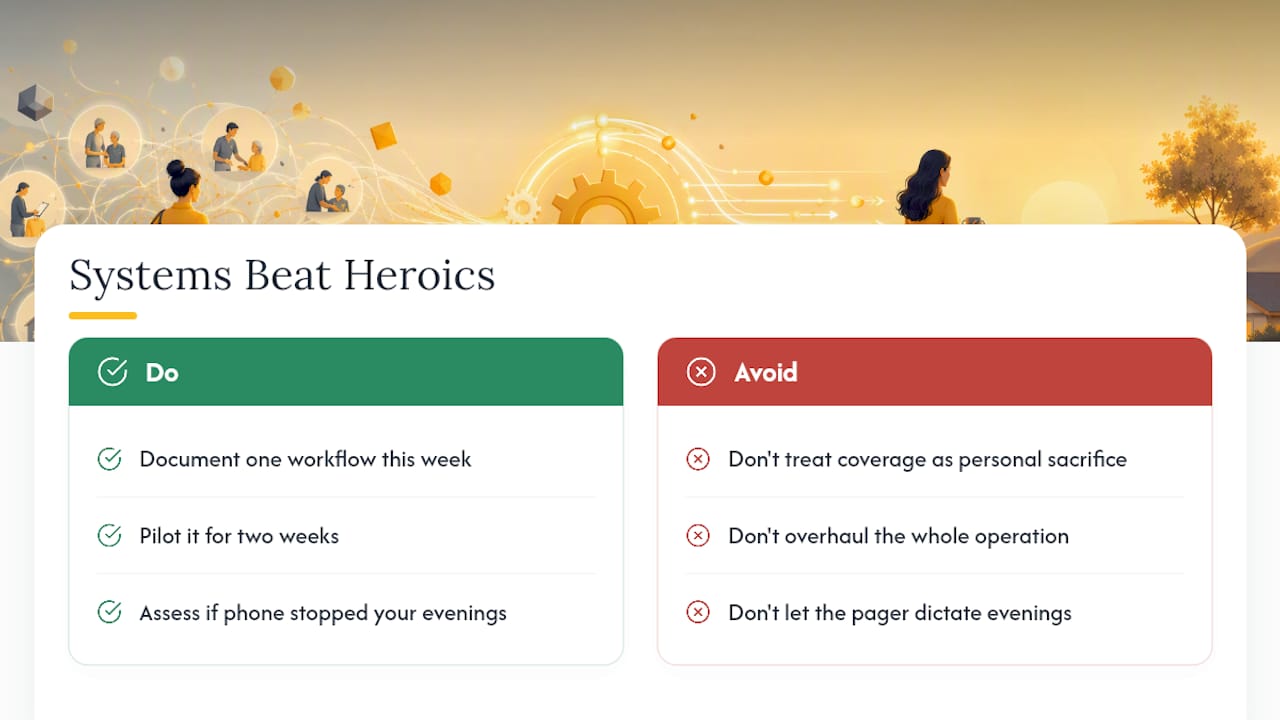
Home care owners wear the on-call pager like a badge of dedication, and it costs them retention, margin, and every quiet dinner they don’t get to finish. The agencies that actually scale are the ones that treat after-hours coverage as an operational system, not a personal sacrifice. That’s the whole premise behind Pod-based staffing models like the one The BOSS System runs, and why the 70% cost-savings claim matters more as a margin argument than a marketing line.
Documenting one after-hours workflow this week and piloting it for two weeks is the entire first step. You don’t need a full operational overhaul to know if it’s working. You need one workflow, one pilot, and an honest look at whether the phone stopped deciding your evenings.
— Ian Dwight Abejo
Let The BOSS System Take the Night Shift
The BOSS System replaces the on-call rotation you’ve been dreading with a trained team, not a single overworked coordinator, so coverage never depends on one person showing up. The Command Center Pod answers 24/7 on your agency’s own protocols: caregiver call-offs get filled, families get a calm voice, clinical issues escalate immediately, and every call lands in a documented morning report waiting for you at your desk.
Onboarding starts with mapping your existing escalation rules into the Pod’s workflow, a short pilot period to test response quality against your protocols, and a review of the first batch of morning reports before full handoff. Most agencies see the shift within weeks, not months, because there’s no recruiting cycle to run first. Beyond after-hours, BOSS also staffs dedicated virtual assistants trained specifically in home care workflows, from intake coordination to billing and credentialing, for owners ready to hand off more than just the phone.
If you want to test the model on a smaller scale first, the BOSS Virtual Professional trial starts at $8 an hour and gives you a low-friction way to see how a trained coordinator handles your actual call volume before committing to a full Pod.
Sources
FAQ
What Are Caregivers Not Allowed to Do?
Caregivers generally cannot administer medications beyond what state regulations and their certification allow, perform skilled nursing tasks reserved for licensed nurses, or handle client finances and legal documents. Exact restrictions vary by state licensing rules and the caregiver’s certification level, so agencies should confirm scope of practice against their own state’s home care regulations.
How Much Does a Home Care Agency Owner Make?
Owner income varies widely based on agency size, client census, payer mix, and how much of the revenue gets reinvested into staffing and operations. Agencies that control overhead, including after-hours labor costs, typically protect margin better than those running full-time in-house on-call rotations around the clock.
Who Owns Home Instead?
Home Instead operates as a franchise network with individual locations owned by independent franchisees under a corporate parent brand. Ownership structure and specific leadership vary by franchise location and corporate changes over time.
How Much Does Medicaid Pay Per Hour for Home Care?
Medicaid reimbursement rates for home care vary significantly by state, program type, and whether the service falls under a waiver program or standard state plan. Agencies should check their specific state Medicaid fee schedule rather than relying on a national average, since rates differ from state to state.
What Does The BOSS System Cost for After-Hours Coverage?
Pricing for the Command Center Pod and On Call Program isn’t published and depends on your agency’s call volume and coverage needs; current details are available directly on The BOSS System’s site. The BOSS Virtual Professional trial, by comparison, starts from $8 per hour for owners who want to test coordinator support before scaling up.
Recommended


Comments