


Cut A/R 30–40%: Private Pay Billing for US Home Care Owners


Private pay billing means the client, family, or fiduciary pays your agency directly, with no insurance carrier in the middle. The single highest-impact move you can make this month is twofold: publish clear, written rates before the first shift, and enroll new clients in autopay at intake. Agencies that combine both see fewer late payments and cleaner books within one billing cycle. Billing and A/R specialists can build this workflow into intake from day one.
TL;DR:
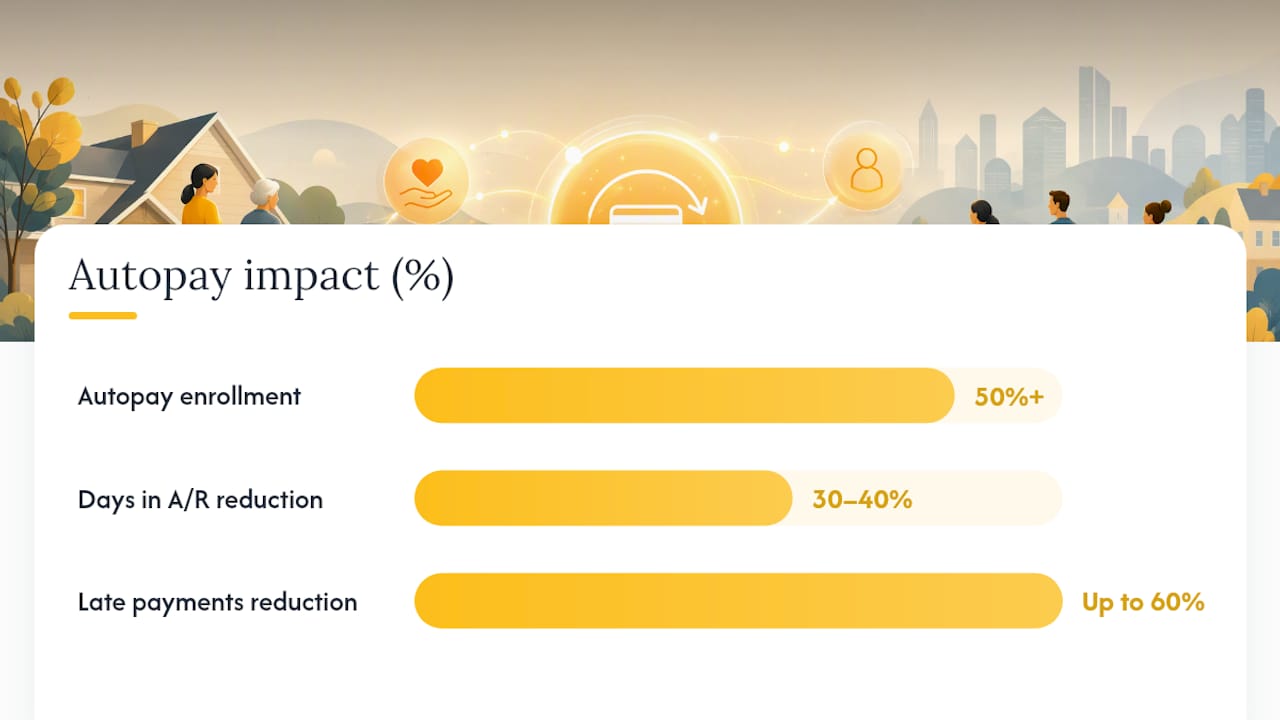
Enrolling over 50% of clients in autopay can reduce late payments by up to 60% and shorten accounts receivable days by 30 to 40 percent.
Weekly billing improves cash flow predictability but requires more administrative effort, while monthly billing creates larger invoices and delayed collection risks.
Setting rates using a cost-plus approach safeguards margins, especially in competitive regions, and should be reviewed annually to prevent underpricing.
In-house billing offers direct control if there is sufficient staff, but outsourcing is advisable when maintaining billing consistency and compliance is challenging.
Proper documentation and follow-up workflows are critical, especially for after-hours calls and collections, to prevent revenue leakage and aging accounts.
Table of Contents
What Private Pay Billing Actually Covers in Your Revenue Mix
Private pay billing puts your agency in the same seat a landlord occupies with a tenant: you set the price, you collect the payment, and no third party adjudicates the claim first. For most home care agencies, this is the dominant revenue stream, and getting the mechanics right early prevents a slow bleed of unpaid invoices later.
You need a designated billing contact for every client file, whether that’s the client, an adult child, or a court-appointed fiduciary. Whoever signs the service agreement should be the same person whose card or bank account is on file. Mixing this up, billing one party while another approves care, is where agencies lose weeks chasing signatures.
Billing cadence matters more than most owners realize:
Weekly billing keeps cash flow tight and predictable, but adds administrative volume.
Biweekly billing balances cash flow with lower processing overhead.
Monthly billing is easiest to administer but creates bigger, harder-to-absorb invoices if a client falls behind.
Unlike insurance billing, private pay has no claims adjudication step. That’s an advantage for speed, but it also means you carry full responsibility for issuing receipts clients may need for flexible spending account or tax purposes, since no insurer will generate that paperwork for them.
Payment Methods and Enrollment: Card, ACH, Portals, and Autopay
Every payment method has a different cost and friction profile, and picking the wrong default for your client base costs you real money over a year.
Credit and debit cards process fast and feel familiar to clients, but processing fees typically run 2.5% to 3.5% per transaction.
ACH bank transfers cost a fraction of card fees, usually under 1%, and suit recurring payments well, though they take a day or two to clear.
Online portals give clients visibility into balances and history, cutting down “did you get my payment” calls.
Paper checks are the slowest and riskiest option, prone to delays, lost mail, and manual reconciliation errors.
Present autopay as the default, not an opt-in afterthought, during the intake conversation. Explain the billing date, the amount, and the cancellation process in writing, and get a signature. That disclosure protects you from disputes later and sets client expectations from the start.
Industry data backs this up directly: agencies that enroll 50% or more of clients on autopay report 30% to 40% fewer days in accounts receivable and up to 60% fewer late payments.
Pro Tip: Ask your payment processor for a tiered ACH rate if more than half your client base pays by bank transfer. Most processors will negotiate once your recurring volume is established.
How to Set Rates for Private-Pay Home Care Services
Rate setting is where a lot of agencies underprice out of fear of losing clients, then wonder why margins never improve. There are two defensible approaches, and you should know when each applies.
Cost-plus pricing. Start with fully loaded caregiver cost (wages, payroll tax, workers’ comp, mileage), add administrative overhead per billable hour, then layer your target margin on top. This method protects profitability regardless of what competitors charge.
Market-benchmark pricing. Survey regional median private-pay rates and position your agency slightly above, at, or below that median based on your service differentiation. Use this when you’re entering a market with established pricing norms.
Blended approach. Calculate your cost-plus floor first, then check it against the regional median. Never price below your floor, even if the market median sits lower.
Revisit rates annually, not reactively.
Payment Plans and Financing for Private-Pay Clients
Payment plans make sense when a client can afford ongoing care but needs to spread a large deposit or a one-time cost, like live-in setup fees, over a few billing cycles. They’re the wrong tool for a client who can’t sustainably afford your rate at all.
3-month plan: 30% deposit at signing, remaining balance split evenly across three invoices.
6-month plan: 20% deposit, balance divided into six equal payments tied to your regular billing cycle.
Enrollment language: state the total amount, payment dates, and consequence of a missed payment in the signed agreement, not a verbal promise.
If you’re considering third-party financing partners, check their consumer disclosure practices and confirm they don’t place a lien or negative mark that could damage a client relationship over a missed payment. Clear, reimagined patient payment plans reduce confusion far more than aggressive collection language ever will.
Collections and Accounts Receivable: A Step-by-Step Workflow
Days in A/R creep up quietly, one skipped follow-up at a time. A structured aging workflow catches problems before they become write-offs.
0 to 15 days past due: automated reminder by text or email, no phone call needed.
16 to 30 days past due: personal call from the billing coordinator, offer a payment plan if needed.
31 to 60 days past due: written notice referencing the signed service agreement, escalate to a supervisor call.
61-plus days past due: decide between a formal payment plan, a negotiated settlement, or referral to a collections agency.
Track two KPIs weekly: average days in A/R and percentage of revenue over 60 days past due.
Pro Tip: Never let the same person who provides hands-on care also handle that client’s overdue balance conversation. Separating the relationship from the collections call preserves trust on both sides.
In-House Billing vs Third-Party Vendors: How to Decide
Cost isn’t the only variable here. Control, compliance, and continuity matter just as much, especially for agencies running lean office teams.
Choose in-house if you have the staff bandwidth for daily reconciliation and you want direct control over client communication tone.
Choose a vendor or outsourced coordinator if billing keeps slipping to the bottom of someone’s to-do list, or if turnover in your office keeps resetting institutional knowledge.
Red flags in vendor evaluation: vague reporting cadence, no named point of contact, and unclear data ownership terms in the contract.
Require in any vendor SLA: weekly A/R aging reports, documented HIPAA safeguards, and a defined escalation path for disputed charges.
Third-party billing vendors can reduce administrative burden significantly, but the quality gap between vendors is wide. A trained billing and A/R specialist who already understands home care workflows closes that gap faster than a generalist bookkeeping service.
Enrollment, Consent, and Receipt Documentation
Every intake packet should capture the client’s legal name, billing contact, payment method, autopay authorization signature, and service rate acknowledgment. Skipping any one of these fields is how disputes start six months later.
Consent language needs to explicitly state the amount, frequency, and cancellation terms for autopay.
Every receipt should show date of service, hours provided, rate charged, and payment method, since clients may need this for reimbursement requests.
Storage should live in an access-controlled system with audit logs, consistent with HIPAA expectations for protected information, retained for at least the period your state requires for business records.
Tax and Compliance Notes Every Owner Should Know
A receipt and an invoice aren’t interchangeable. An invoice requests payment; a receipt confirms it happened, and that distinction matters when a client’s family submits records for tax documentation or a flexible spending account claim.

Out-of-pocket costs, including deductibles, copays, and coinsurance, are separate from private pay entirely, but clients often confuse the two. For 2026, Marketplace out-of-pocket maximums sit at $10,600 for individuals and $21,200 for families, context worth knowing if a client asks how private pay interacts with their insurance. Never offer tax or legal advice yourself. Refer clients to a CPA or elder law attorney for anything beyond basic receipt documentation.
Why After-Hours Coverage Changes Your Collections Numbers
Missed intake calls don’t just cost you a client. They cost you the enrollment conversation where autopay gets set up correctly the first time. A trained coordinator through The BOSS System typically costs about 70% less than an equivalent in-house hire, once you factor in payroll taxes, benefits, and equipment.
A caregiver call-off at 2 a.m. shouldn’t mean a missed shift and a family scrambling. It should mean a trained team fills the shift, documents the call, and keeps the intake and billing conversation on track for the next business day.
That continuity matters for revenue, not just family reassurance. Every missed after-hours call is a missed chance to correct a billing detail before it becomes a 60-day past-due invoice.
A 30-Day Checklist to Stabilize Private-Pay Cash Flow
If I were rebuilding a billing process from scratch, I’d spend the first 30 days on four things: naming a single billing contact per client file, enrolling every new client in autopay before their first shift, setting a weekly A/R aging report on your own calendar, and invoicing at intake instead of waiting for the first billing cycle to catch up. Document every consent and store every receipt as you go, not after a dispute forces you to reconstruct the file.
How The BOSS System Supports Private-Pay Billing Operations
Most agencies don’t lose revenue because their rates are wrong. They lose it because nobody owns the follow-up between intake and the first invoice, and nights and weekends have no coverage at all. The BOSS System closes that gap with trained billing and A/R specialists who already know home care workflows, plus a Command Center that answers calls 24/7 so a missed 2 a.m. call-off doesn’t turn into a missed enrollment conversation the next morning.
This fits agencies that are growing faster than their office staff, or where one person currently owns billing, scheduling, and intake all at once, a setup where something always slips. It also fits owners tired of being the fallback contact for every after-hours crisis. If billing follow-up, autopay enrollment, or after-hours coverage feels like the weak link in your cash flow, contact The BOSS System to talk through what a dedicated Pod would look like for your agency.
This article is general information, not a substitute for advice from a qualified financial advisor. Consult a qualified financial professional about your own circumstances before acting on anything here.
Sources
Recommended


Comments