


Caregiver Interview Questions: 30 Prompts With Sample Answers

This guide covers the caregiver interview questions employers actually ask, model answers you can adapt in your own words, and the prep checklist that gets you in the door calm and ready. The single best move before you walk in: build three STAR stories (Situation, Task, Action, Result) that cover a medical emergency, a difficult family member, and a hands-on task like a transfer, and bring your certifications with you.
TL;DR:
Demonstrate specific experience with conditions like dementia or post-surgical mobility to show real handling of complex caregiving tasks.
Be prepared to narrate step-by-step responses to technical questions like safe client transfers and emergency protocols, emphasizing clear, sequential actions.
Bring essential documentation, research the employer or client condition, and rehearse relevant STORIES to build confidence and relevance during the interview.
Clearly state your availability for shifts, honesty about limitations, and outline how you document care and communicate with families to demonstrate reliability.
Expect to be tested with hands-on tasks or conflict scenarios, and focus on showing trustworthiness, safety habits, and an understanding of your limits rather than just compassion.
Table of Contents
Behavioral, Situational, Technical, and Logistics Questions: How to Answer Each
What Employers Actually Look For, and the Red Flags That Cost You the Job
Confidentiality and Reporting: The Legal Questions You’ll Face
Assessing Stamina: Physical and Emotional Readiness Questions
Editorial Perspective: Why Most Caregiver Interview Advice Misses the Point
Common Caregiver Interview Questions and Sample Answers
Most agencies and families run through the same eight or nine themes during a caregiver interview, even if the wording changes from one interviewer to the next. Indeed’s career advice team notes that interviewers consistently probe for compassion and reliability, which is why questions about motivation and difficult moments show up almost every time. Below are the questions that come up most, with short answers you can shape around your own history.
“Why do you want to be a caregiver?” Skip the generic “I love helping people” line. Say something specific: “My grandmother had Parkinson’s, and I was the one who learned her medication schedule and her moods. I realized I was good at staying calm when things got hard, and I wanted to do that for other families.” Interviewers want to hear purpose plus fit, not a rehearsed slogan.
“Describe your caregiving experience.” Quantify it. “I’ve worked with three clients over two years, two with dementia and one recovering from hip replacement surgery. I handled medication reminders, meal prep, and mobility assistance daily.” Naming specific conditions like dementia or post-surgical mobility needs tells the interviewer you’ve handled real complexity, not just companionship visits.
“What do you do if a client refuses their bath or medication?” This is one of the most common caregiver screening questions because refusal happens constantly in home care. A strong answer shows empathy first, then escalation: “I try to understand why. Maybe the water feels too cold or they’re embarrassed. I offer choices, like which time of day works better, and I never force anything. If refusal continues and it’s a safety issue, I document it and call the supervisor or family right away.”
“Tell me about a time you handled an emergency.” Use the STAR method here without naming it out loud. “One client fell in the bathroom (Situation). I needed to check for injury without moving her before I knew it was safe (Task). I called 911, kept her calm and still, and stayed on the line until paramedics arrived (Action). She had a minor fracture, but the quick response meant no further injury, and the family thanked me for staying level-headed (Result).”
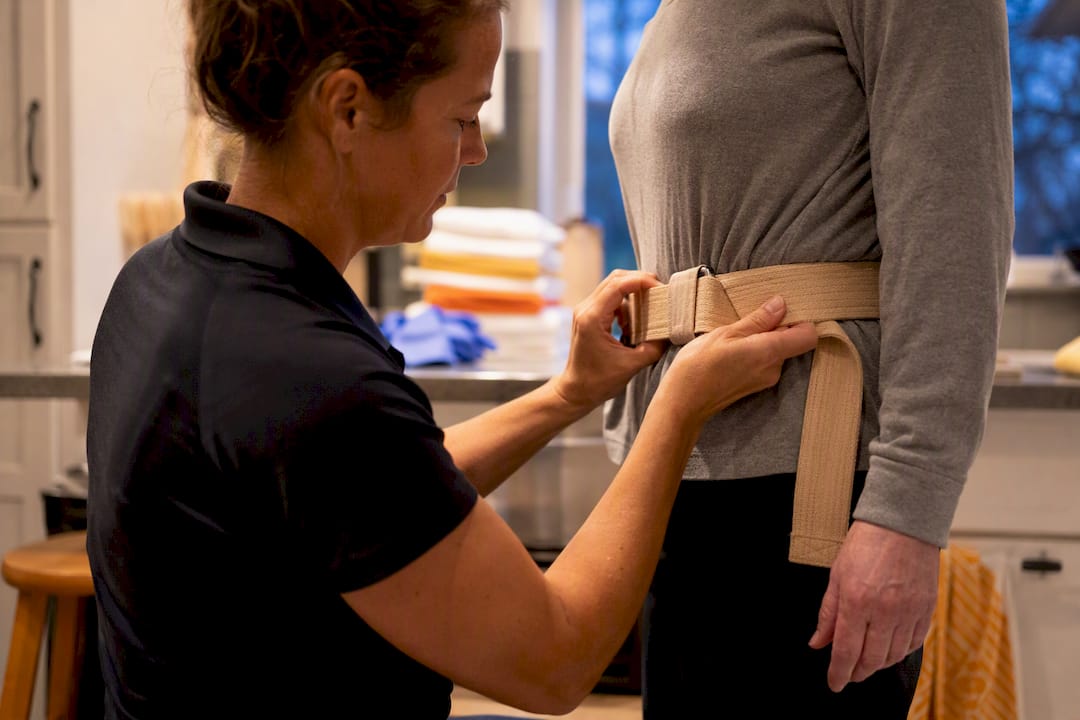
“How do you move a patient safely?” This is a technical question, and vague answers cost you here. Narrate the actual steps: assess the client’s mobility level, explain what you’re about to do before you do it, lock the wheelchair or bed brakes, use a gait belt or transfer board when needed, and keep your own back straight and knees bent. Workable’s home health aide interview guidance points out that employers use this exact question to separate candidates who’ve actually done transfers from those who only think they know how.
“How do you document care and communicate with families or the care team?” Employers want specifics: “I log every shift with time, tasks completed, meals eaten, and any changes in mood or mobility. If something’s off, like a client seeming more confused than usual, I call the family or the office the same day, not at the next shift.”
“Are you available for nights, weekends, or long shifts?” Be honest here. Vague availability is a red flag interviewers remember. If you can’t do overnight shifts, say so and offer what you can do instead: “I can’t commit to overnights right now because of childcare, but I’m flexible for weekends and can do 8 to 12 hour shifts most weekdays.”
“Tell me about a time you disagreed with a supervisor or family member.” This tests boundary-setting, not conflict-avoidance. “A family wanted me to give more medication than prescribed because their mother seemed uncomfortable. I explained I couldn’t adjust dosages without a doctor’s order, but I offered to call the physician that day to ask about it. They appreciated that I took their concern seriously without cutting corners.”
Behavioral, Situational, Technical, and Logistics Questions: How to Answer Each
Recognizing the question type before you answer keeps you from rambling through a yes/no question or giving a one-word reply to something that needs a full story.
Behavioral questions ask about the past: “Tell me about a time when…” Use STAR and keep the result concrete, ideally with a number or outcome (“she regained enough mobility to walk to the mailbox again”).
Situational questions ask about a hypothetical: “What would you do if a client fell?” Walk through your steps in order and lead with safety and communication, not just the end result.
Technical questions test hands-on knowledge: transfers, medication reminders, hygiene routines. Answer in clear, sequential steps, like you’re narrating an instruction manual, because that’s often exactly what the interviewer is listening for.
Logistics and character questions (availability, preferences, references) deserve short, direct answers. Don’t over-explain; state the fact and move on.
Mixing these up is the most common interview stumble. A candidate who answers a technical transfer question with a vague feel-good story, instead of the actual steps, leaves the interviewer wondering if they’ve ever done one.
How to Prepare for a Caregiver Interview
Preparation is what separates a nervous candidate from a confident one, and most of it takes less than an hour.
Gather your documents. Bring copies of CPR and First Aid cards, your CNA or HHA certification if you have one, a photo ID, at least two references, and vaccination records if the employer has asked for them. Job-search guidance from Monster recommends having a specific example ready for each key skill area, safety, communication, and empathy, rather than one generic story you try to stretch across every question.
Research the employer or family. Look up the agency’s website, or if it’s a private family, ask what condition the client has before the interview. Tailor one of your STAR stories to match, especially if the job involves dementia care, mobility support, or post-surgical recovery.
Rehearse three STAR stories out loud, plus a 30 to 45 second self-introduction. Practicing out loud, even alone in your car, catches the awkward pauses text prep misses.
Handle the logistics the night before: confirm your route, pick a clean and practical outfit, and if the role involves a skills demo, run through it once at home.
Prepare three questions to ask the interviewer about training, supervision structure, and typical shift expectations.
Pro Tip: Give each STAR story a one-line summary you say near the end, something like “and that’s how I kept her safe during a fall,” so the interviewer remembers the outcome even if they forget the details.
What Employers Actually Look For, and the Red Flags That Cost You the Job
Interviewers are scanning for a short list of traits, and most of them show up in how you tell your stories, not just what you say.
Compassion shown through specific examples, not just claimed in adjectives.
Reliability, backed by a consistent work history and honest availability.
Clear communication, tested by how well you explain a technical answer like a transfer or medication routine.
Safety-first habits, especially around falls, medication, and escalation.
Boundary awareness, meaning you know when to call a supervisor instead of improvising.
Red flags interviewers watch for include blaming families for difficult behavior, giving evasive or vague answers about emergencies, and inconsistent availability with no explanation offered. Bringing documented certifications, punctuality, and real references does more to build trust than any polished answer.
What Real Interviewers Test With Hands-On Prompts
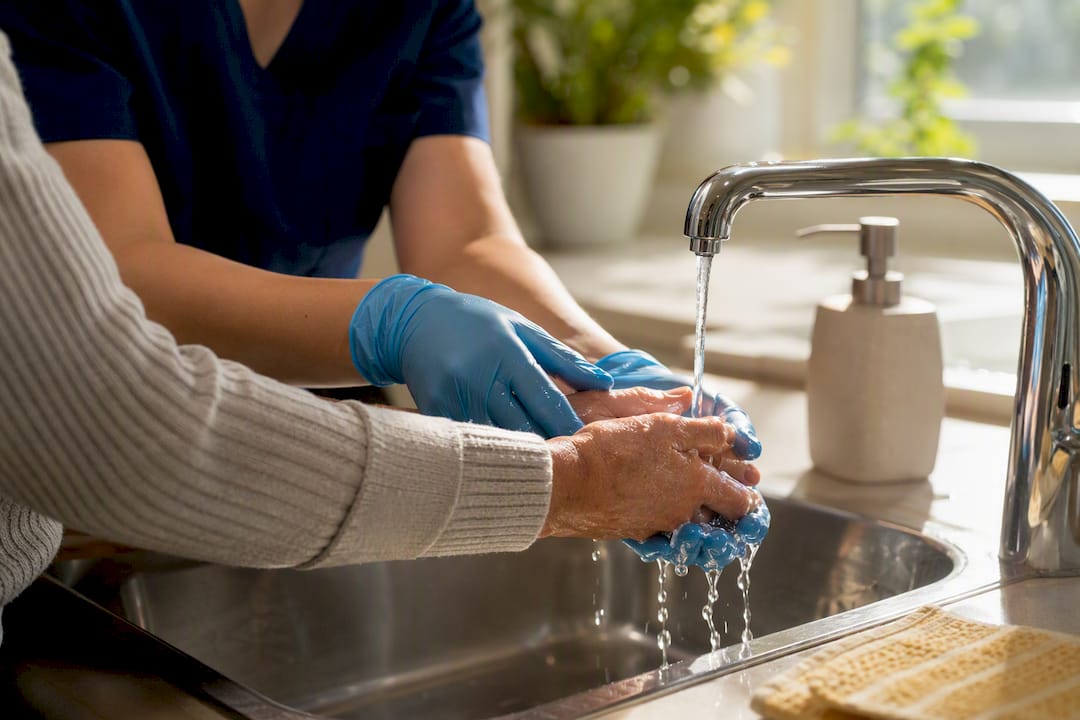
Some interviewers skip the talking and ask you to demonstrate. The Interview Guys note these task walk-throughs, like showing how you’d transfer a client from bed to wheelchair, usually run three to five minutes and reveal more than a dozen verbal questions combined. Interviewers listen for de-escalation language, clear boundary-setting, and, importantly, whether you admit your limits. Indeed Hire’s guidance for employers confirms that candidates who say “I’d call for help if the lift exceeded what I could do safely” score better than those who claim they can handle everything alone. Narrate your actions out loud while you perform any demo; silence makes it hard for the interviewer to tell whether you understand what you’re doing or are guessing.
Your 24-Hour Pre-Interview Checklist
Task | Why it matters |
Confirm interview time and route | Avoids last-minute panic |
Print certifications and ID copies | Shows preparedness |
Rehearse three STAR stories | Keeps answers concrete |
Learn one fact about the employer | Signals genuine interest |
Pick your outfit tonight | One less morning decision |
Confirm your two references are reachable | Speeds up hiring |
Charge your phone fully | No missed calls after |
Get a full night’s sleep | Sharpens focus and calm |
Confidentiality and Reporting: The Legal Questions You’ll Face
Expect at least one question about confidentiality or mandatory reporting, especially for agency roles. A common prompt is: “What would you do if you noticed signs of neglect or abuse in a client’s home?” The correct answer involves documenting what you observed factually, without accusation, and reporting it to your supervisor or the appropriate adult protective services line the same day, not waiting until your next shift. Confidentiality questions often sound like: “A neighbor asks how your client is doing. What do you say?” The right answer is that you don’t share medical or personal details with anyone outside the care team or family, full stop.
Structured interview protocols used in clinical caregiving research build in specific prompts around confidentiality and disclosure precisely because these situations come up often in home settings, where there’s no supervisor down the hall to consult in the moment. If you’re unsure how a specific agency handles reporting, that’s a fair question to ask the interviewer directly. It shows you take the responsibility seriously rather than assuming you already know the answer.
Assessing Stamina: Physical and Emotional Readiness Questions
Caregiving is physically demanding and emotionally draining in ways that don’t always show up on a resume, so expect questions that probe both. A physical stamina question might sound like: “This role involves lifting and repositioning a 180 pound client several times a shift. Walk me through how you’d handle that safely.” Your answer should mention body mechanics, use of transfer equipment, and a willingness to ask for a second person when a lift is unsafe alone.
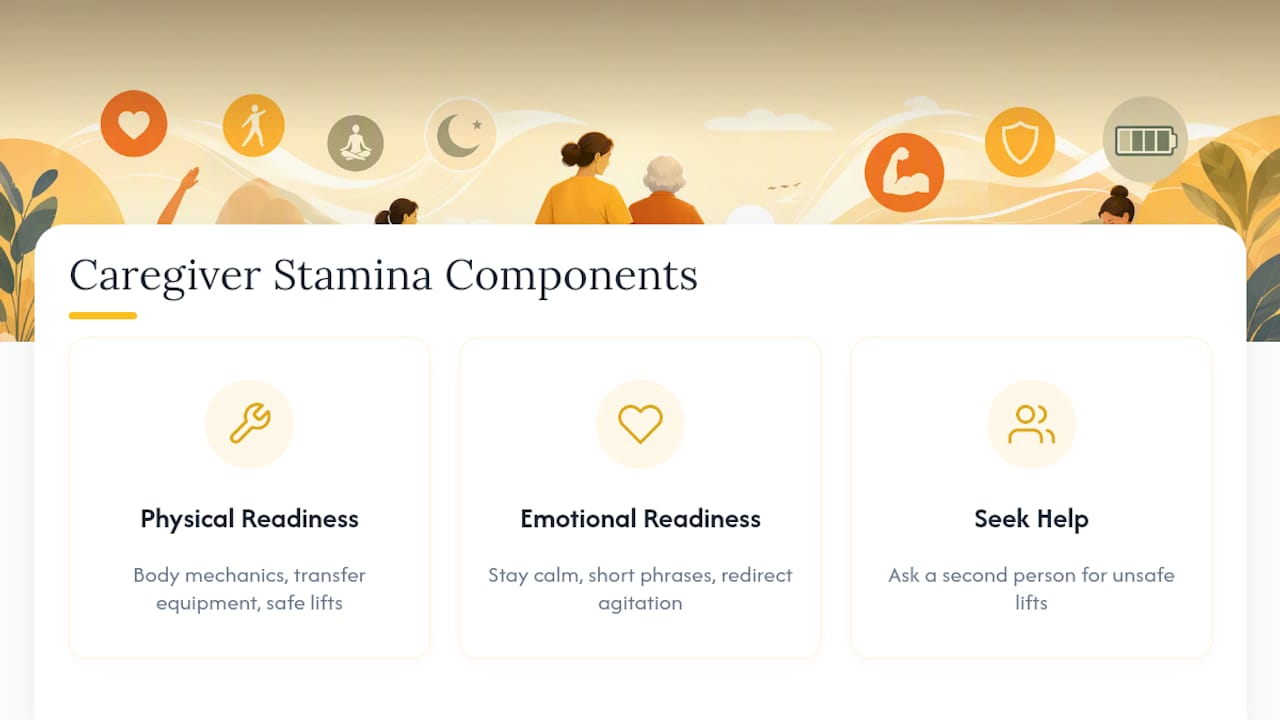
Emotional stamina questions look different: “How do you handle a client who is combative or has severe dementia-related agitation?” The Alzheimer’s Association’s communication guidance recommends staying calm, using short simple phrases, and redirecting rather than arguing, which is exactly the kind of specific technique interviewers want to hear back from you. A candidate who says “I just have patience” sounds less prepared than one who describes an actual redirection technique they’ve used before.
Editorial Perspective: Why Most Caregiver Interview Advice Misses the Point
Most caregiver interview advice treats the interview like a personality test. It isn’t. The research behind hiring guides and clinical interview protocols points somewhere else entirely: employers are testing whether you can be trusted alone in someone’s home during the worst five minutes of their week. That’s why a hands-on transfer demo or a five-minute walk-through reveals more than ten personality questions combined.
The conventional wisdom oversells warmth and undersells specificity. Saying you’re compassionate is worthless without a story that proves it. What the reader should prioritize first isn’t rehearsing feel-good phrases. It’s building three tight, specific stories, one medical emergency, one difficult family interaction, one hands-on task, and being willing to say “I’d call for backup” instead of pretending you can handle everything solo. Interviewers trust the candidate who knows their limits more than the one who claims they don’t have any.
— Ian Dwight Abejo
Sources
Recommended


Comments